Practice level | Level 1 · First Colors · Ages 4–5 Match, name, mix, and order familiar colors.
Choose something to explore
- Level 1 · First Colors · Ages 4–5: begin with Mix Colors, Build a Rainbow, and Flower Colors for familiar color naming, matching, and simple ordering.
- Level 2 · Color Families · Ages 5–6: add Warm / Cool / Neutral sorting and introductory Picture Guides while keeping hands-on color mixing.
- Level 3 · Color in Nature · Ages 6–7: connect Flower Colors, Nature Color Codes, Animals by Color, and Picture Guides to real-world patterns, camouflage, and signals.
- Level 4 · Color Systems · Ages 7–9: focus on Artist Lab, Sound Colors, and more advanced Picture Guides for value, visual systems, and cross-sensory thinking.
- Level 5 · Color Science & Ideas · Ages 8–10: move into Color Wonders, advanced Artist Lab, and Sound Colors for perception, light, animal vision, and deeper color ideas.
More for parents & educators
- Suggested, not locked: ages are starting points. Choose the level that best matches the child’s interest, language, attention, and confidence.
- Each level has a different focus: the Welcome activity set changes immediately as the slider moves, so the progression is visible before the level is confirmed.
- Garden keeps the activity level: opening an activity confirms the level you entered from, so Garden returns to that same level.
- Conversation matters: use explanations as prompts for noticing, comparing, and wondering rather than as a test the child must complete.
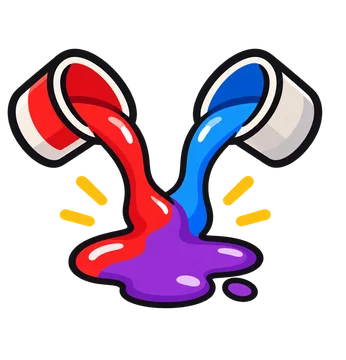
MIX
Mix Colors
Choose two colors and see what new color grows in the garden.
Pick your first color.
Color Mixing
Who should keep this color in their story?
📖 Oakley's Color Journal
Your Color Journal is waiting for its first color.

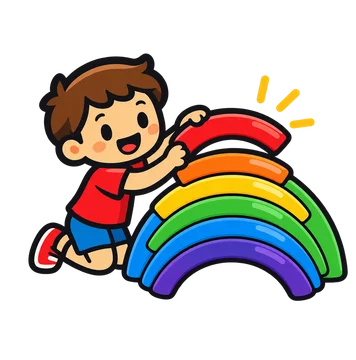
BUILD
Build a Rainbow
Build the rainbow in order. Red comes first.
The sky is waiting. Choose the first color to help the rainbow grow.
🌈 You made a rainbow!

SORT
Warm, Cool, or Neutral
Is this color warm, cool, or neutral?
A color is visiting the garden. Is its feeling warm, cool, or neutral?


CREATE
Color Palette Studio
Choose one color and discover which colors work beautifully together.
PLAY WITH THE COLOR WHEEL
Where should our color adventure begin?
Touch, drag, or use arrow keys on the wheel.
#338BBF
CHOOSE YOUR COLOR FAMILY
Which colors belong together?
Neighbors sit close together on the color wheel. They often feel gentle and connected.
Artist’s Secret: Why do these colors belong together?

This is a digital HSL color-wheel model of harmony, not a physical paint-mixing simulator. Artists can combine colors in many other ways, too.

PAINT · MY COLOR CREATION
Make something with your colors
Choose colors from your palette, then paint a garden with flowers, a butterfly, and grass.
Tap a part of the picture to give it your chosen color. You can also use Tab and Enter.
ANIMALS & NATURE STAMPS
🌳 TREES10 tree designs · tap to explore
Choose a color, then tap the picture.

QUICK COLOR GAME
Can you find the opposite?
The opposite lives across the color wheel. Which of these three colors is it?

DISCOVER COLORS AROUND YOU
Find a palette in your picture
Choose a photo or artwork. See five colors from it, then tap one to explore its color friends.
Your picture stays in this browser. It is not uploaded anywhere.

CREATE · LEVELS 4–5
Drawing & Light Studio
Choose a drawing or light experiment. Build a picture one step at a time.
The light activity is an artistic illustration of illumination, not a calibrated physics simulation.
PAINT
Artist Lab
Try a studio discovery first, then open the reference shelf when you want to look deeper.
Studio discovery · Page 1 of 2
Notice first. Explain later.
These are the Artist Lab experiences to try with your eyes and hands before reading the idea behind them.
Artist reference shelfPaint, light, print, value, and different ways of seeing.

Paint Mixing

Pigments / paint
Paint colors mix like puddles of pigment. This is the color world artists use with brushes.
Light Mixing
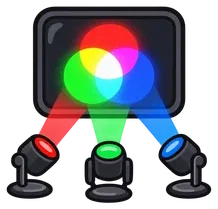
Screens / glowing light
Light mixes differently. Screens use red, green, and blue light.
Printing Colors
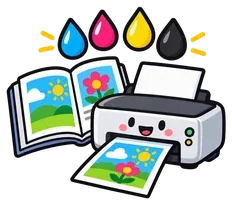
Books / printed pictures
Printing uses cyan, magenta, yellow, and black to build colors on paper.
Gray Garden
Light • middle • dark
Artists use gray to see light and shadow. White is the lightest. Black is the darkest. Gray lives between them.
Animal Eyes
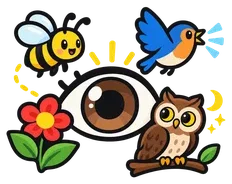
Different eyes, different worlds
Every animal has its own color world. The same flower may look different to a child, a dog, a bee, and a bird.
Practice what you knowColor Detective is a knowledge check, not an Artist’s Secret discovery.

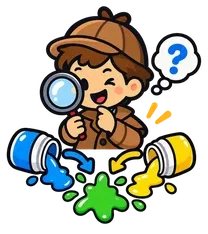
Practice
Color Detective
Test your color knowledge

DISCOVER
Color Wonders
Color is not only what we see. It is light, eyes, brains, nature, culture, and feeling working together.
LOOK CLOSER
Try these discoveries
Make a guess, change one thing, then notice what your eyes do.
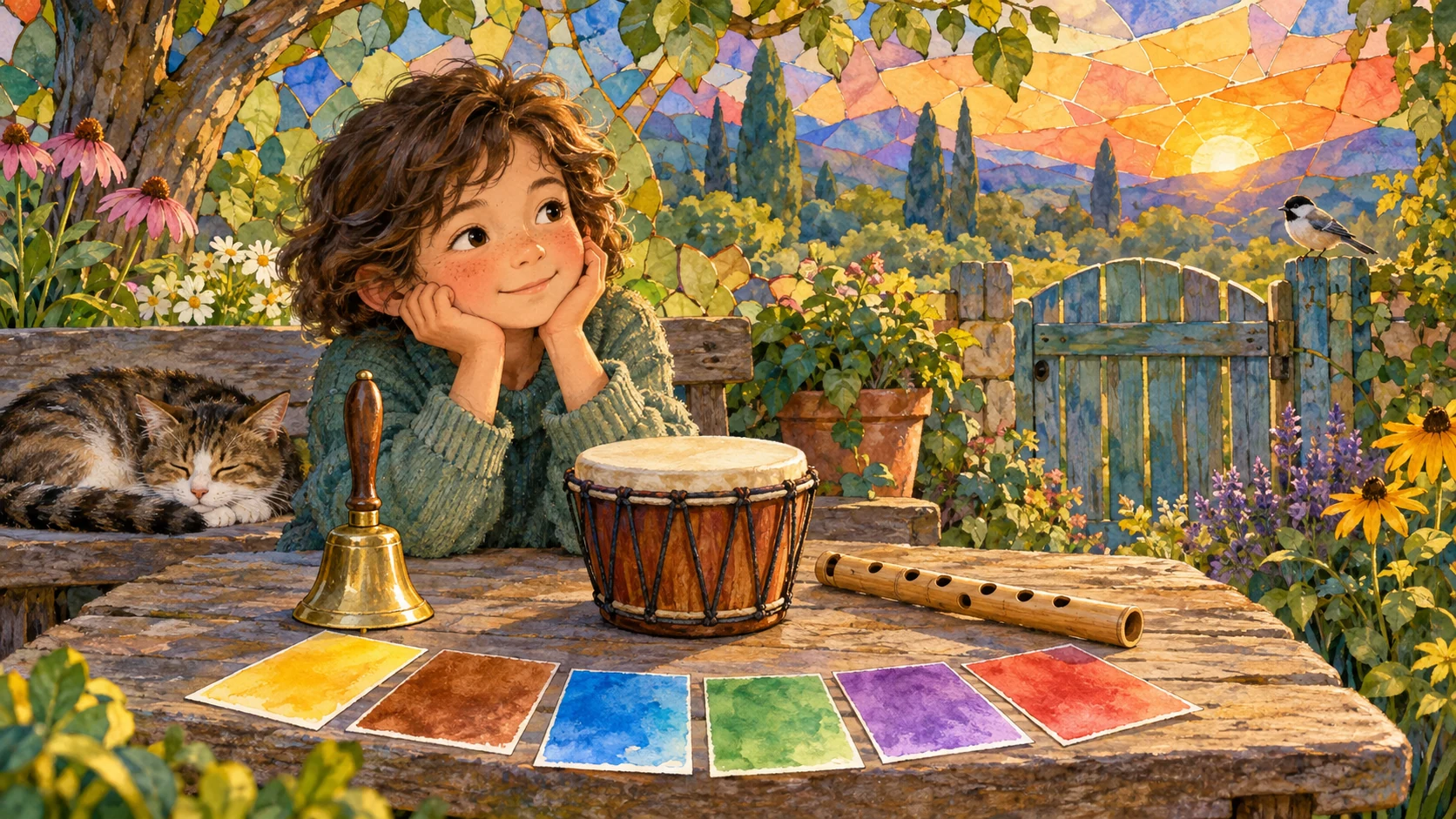
MORE TO NOTICE
More Color Wonders
Quick references for ideas you may want to notice, compare, and explore later.
Objects reflect light
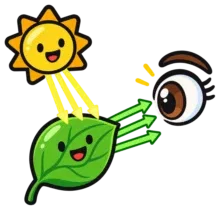
A leaf is not “green” inside itself. It reflects more green light to our eyes and absorbs more of some other wavelengths.
Child prompt: What colors do you think this object sends back to your eyes?
Eyes do not see every color
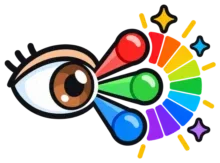
Most people have three kinds of cone cells. Together, they help the brain build millions of color experiences.
Connects to Artist Lab: screens mix red, green, and blue light because our eyes respond to those channels.
Bulls do not hate red
The famous red cape myth is mostly about movement. Bulls react to the moving cloth, not because red makes them angry.
Useful myth-buster: color signals can matter, but motion matters too.
Animals have different color worlds
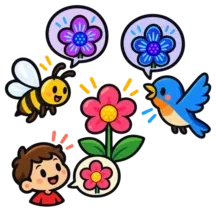
Dogs, cats, bees, birds, and people do not see the same scene in the same way. Bees and many birds can see ultraviolet patterns that people miss.
Connects to Nature Color Codes: flowers may carry hidden guide marks for pollinators.
Some blues are “phantom” blues
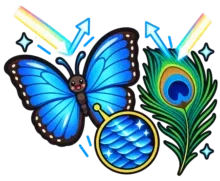
A morpho butterfly or peacock feather can look bright blue because tiny structures reflect blue light. The color comes from shape and light, not a simple blue dye.
Connects to Mix Colors: pigment color and light-structure color are not the same thing.
Blue is rare in flowers
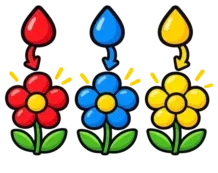
True blue is uncommon in plants. Many flowers that look blue use special chemistry or structure, while many “blue” flowers lean violet or purple.
Child prompt: Can you find a flower that is really blue, or is it closer to purple?
Bright colors can warn predators

Monarch butterflies, ladybugs, and poison dart frogs use bold color patterns that can signal: “I may taste bad or be unsafe to eat.”
Science word: aposematism, a warning signal that predators can learn.
Some animals borrow danger

A harmless animal can survive by looking like a dangerous one. This kind of copycat protection is called Batesian mimicry.
Connects to Nature Color Codes: sometimes color tells the truth, and sometimes color pretends.
Hydrangeas can change color
Some hydrangeas bloom pink in more basic soil and blue in acidic soil when aluminum becomes available to the plant.
Careful wording: not every hydrangea changes, and garden conditions matter.
Octopuses are color performers
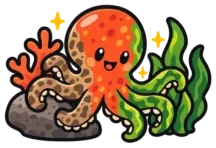
Octopuses and cuttlefish can change skin color and texture with remarkable speed, using their bodies like living camouflage screens.
Child prompt: What background would you choose if you wanted to disappear?
Color vision helped animals find food
Animal color vision is very old. Being able to notice ripe fruit, young leaves, flowers, or signals from other animals can help with survival.
Context: color vision evolved in different ways for different animals.
Blue is often a favorite
Many large surveys find blue near the top of favorite-color lists across countries and age groups.
Discussion prompt: Do favorite colors come from nature, culture, memory, or mood?
Red and yellow grab attention
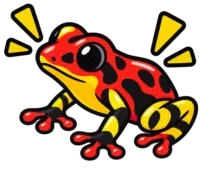
Restaurants and brands often use red and yellow because they are bright, noticeable, energetic colors. Appetite claims are popular, but context and culture matter.
Keeps the lesson honest: design can influence attention without becoming magic.
Pink may feel calming
Some institutions have tested pink rooms to reduce agitation. The evidence is mixed, so it is better to say pink may feel calming for some people.
Child prompt: Which colors help you feel calm?
Purple was once precious

In ancient times, rich purple dye was difficult to make, especially Tyrian purple from sea snails. That made purple a color of power and royalty.
Connects color to history: rare materials can change what a color means.
White wedding dresses became a fashion signal

Brides wore many colors in the past. Queen Victoria’s white wedding dress in 1840 helped make white bridal gowns fashionable in many Western traditions.
Good culture note: color meanings change across time and place.
Color can carry memory and emotion
Some people have strong emotional responses to colors. A rare phobia of colors is called chromophobia or chromatophobia.
Personal response: color feelings are individual, and no color feels the same to everyone.
Green can be camouflage, not just pigment
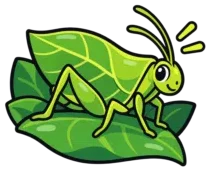
Some insects and frogs look green because yellow pigments and blue-reflecting structures work together. The result can make them vanish among leaves and grass.
Connects to Nature Color Codes: green can mean “I am hiding in plain sight.”
Mammals almost never make true green fur

A sloth may look green because algae grows on its fur, but mammal hair itself usually uses browns, blacks, tans, grays, reds, or whites, not true green.
Good comparison: feathers, scales, skin, and fur do not create color in the same way.
Red often comes from real pigment
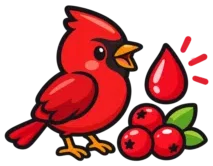
Unlike many bright blues, red in animals often comes from pigments such as carotenoids from food or other body-made pigments. In birds, rich red can sometimes signal health.
Careful wording: one color can mean different things in different animals.
Yellow can hide or announce
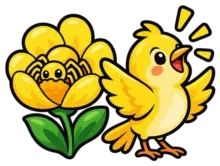
Yellow may help a spider blend into a flower, help a bird stand out to a mate, or help an insect warn a predator. The same color can do different jobs.
Child prompt: Is this yellow trying to hide, invite, or be noticed?
Brown is a survival color
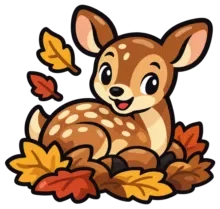
Browns and tans often come from melanin. They help deer, rabbits, doves, moths, and many other animals blend into bark, soil, dry grass, and leaf litter.
Connects to Hiding Colors: quiet colors are powerful too.
White sunlight holds many colors
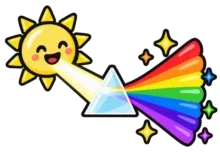
Sunlight may look white, but it carries the rainbow. The sky changes color because air, dust, smoke, water droplets, and tiny particles scatter those colors differently.
Connects to Artist Lab: light color and paint color do not behave the same way.
Blue sky comes from scattered light
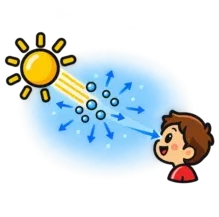
Tiny gas molecules in the atmosphere scatter shorter blue and violet wavelengths in many directions. Our eyes and brains make the daytime sky look mostly blue.
Careful wording: violet scatters too, but human vision and sunlight balance make blue dominate what we notice.
Sunsets take the long road

Near sunrise or sunset, sunlight travels through much more air. Much of the blue light scatters away, so more red, orange, and yellow light reaches our eyes.
Child prompt: Is the sun high above you, or low near the horizon?
The green flash is a tiny prism trick

Very rarely, just as the sun sets or rises, the atmosphere can bend colors apart enough for a small green edge or flash to appear for a moment.
Best grown-up note: never stare at the sun. This is a horizon phenomenon, not a child-viewing task.
Volcanoes can paint purple sunsets

Large volcanic eruptions can send tiny particles high into the atmosphere. Those particles can scatter light in unusual ways, creating vivid purple or violet twilight colors.
Connects sky color to particles: the air is not empty, even when it looks clear.
Smoke can turn the sky orange

Wildfire smoke and ash can block or scatter shorter wavelengths, leaving more orange, red, or gray light to reach us during smoky days.
Safety note: beautiful colors can sometimes mean unhealthy air.
MATCH
Flower Colors
Flowers help us remember colors. Pick the color that matches the flower.
What color is this flower?


LISTEN
Sound Colors
Music does not send out colored light, but our brains often connect sound with color, shape, mood, and movement. Sometimes this is an automatic sensory experience, and sometimes it is simply a playful way to use imagination.
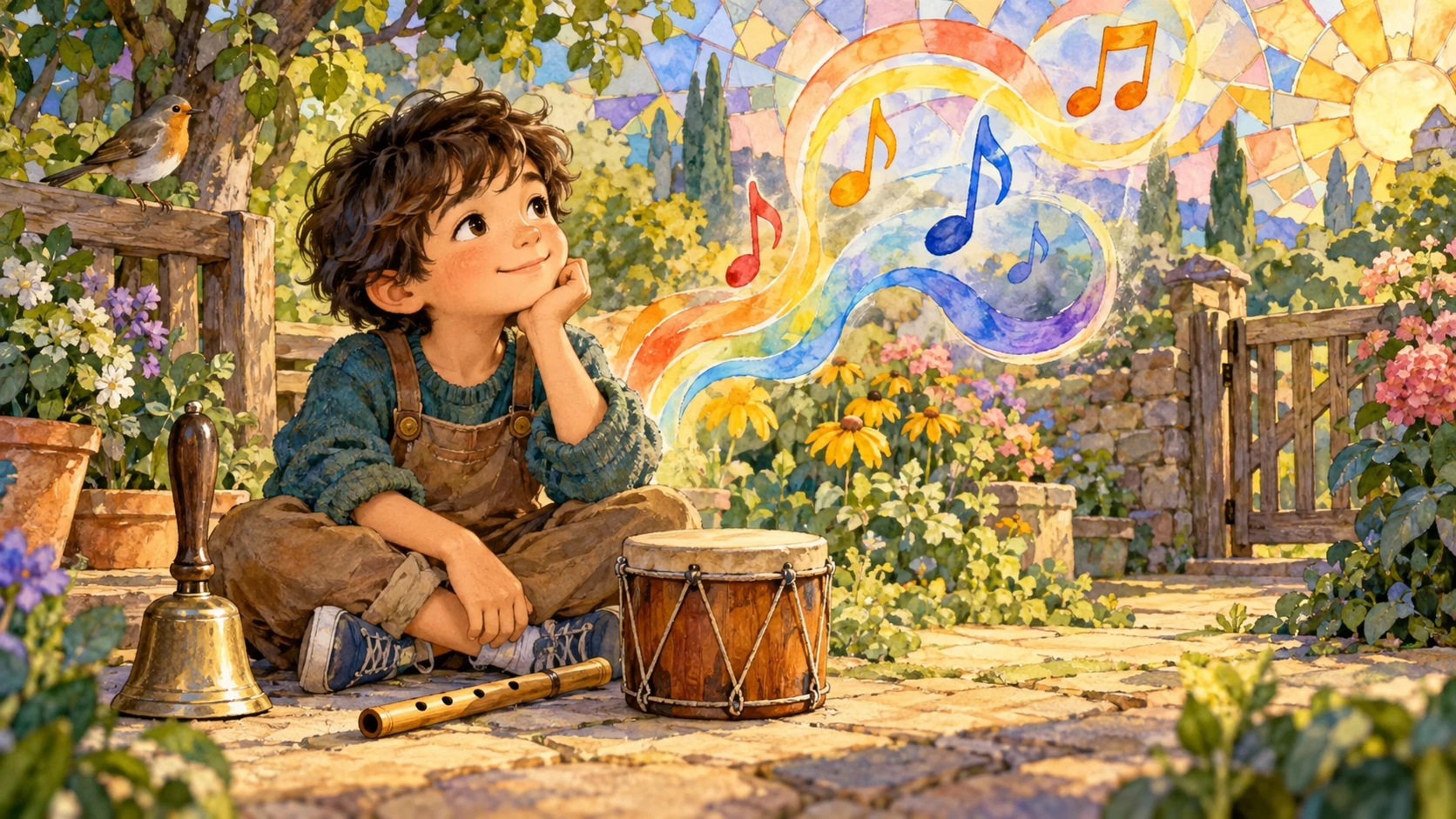
Every listener hears a different rainbow
A high violin note might feel like yellow sunlight to one listener and a cool blue wave to another. A deep bass sound might feel purple, brown, black, or warm red.
Try asking: “What color does this sound feel like inside your mind?”
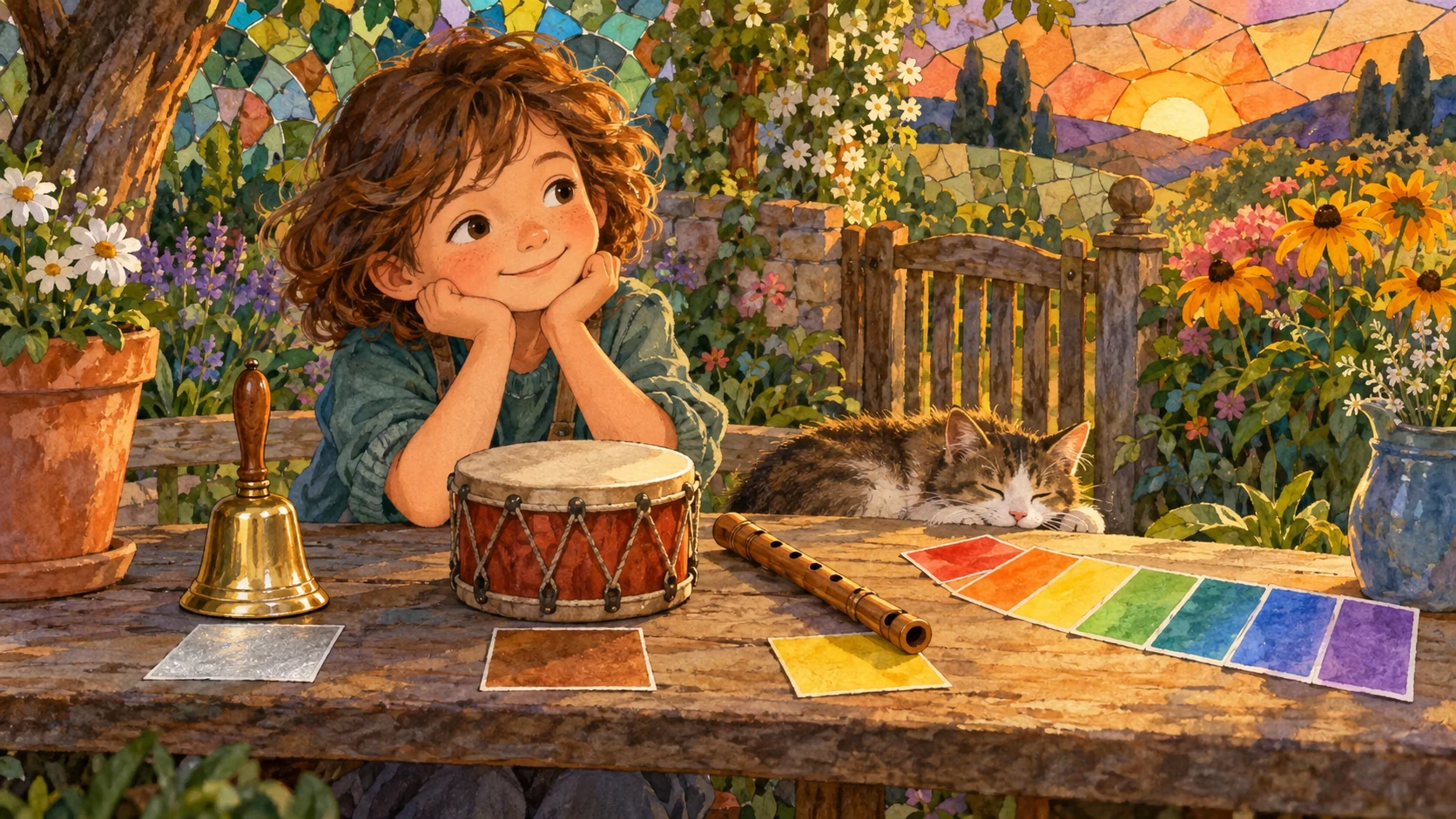
Chromesthesia: the brain’s color connection

Some people experience a form of synesthesia in which music, voices, whistles, or individual notes automatically bring color impressions to mind. It happens without trying, and every person’s experience is different.
Child-friendly wording: “Some brains connect different senses in unusual and colorful ways.”
Musical paintbrush: tone color
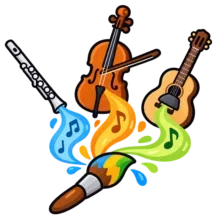
Musicians use the word timbre, or “tone color,” to describe the personality of a sound. A flute can sound bright and shiny, a cello warm and cozy, and a muted guitar soft and secret.
This is a metaphor, but it gives musicians a clear way to talk about sound.
Sound shadows: bright and dark
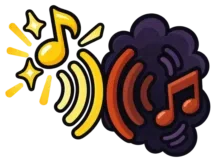
High, sharp, sparkling sounds are often described as bright or brilliant. Low, rounded sounds are often described as dark, warm, deep, or shadowy.
Art connection: painters and musicians both use words like light, dark, warm, and cool.
The cozy noise rainbow
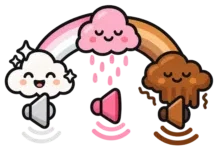
White noise sounds broad and hissy. Pink noise has more low-frequency softness, like steady rain. Brown noise is deeper and rumbling, like a low waterfall far away.
These names describe frequency patterns, not visible colors.
Paint the music

Play a slow song and invite children to choose colors, shapes, or lines that match what they hear. Curves, dots, zigzags, and swirls are all welcome.
There is no correct picture. The point is to notice and respond.
Storybook soundtrack

Read a story with calm background music. Pause at an important moment and ask, “If this scene were a color, what color would it be?”
This connects listening, storytelling, emotion, and visual imagination.
Sound-color scavenger hunt
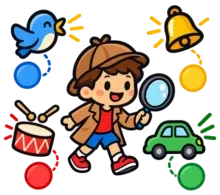
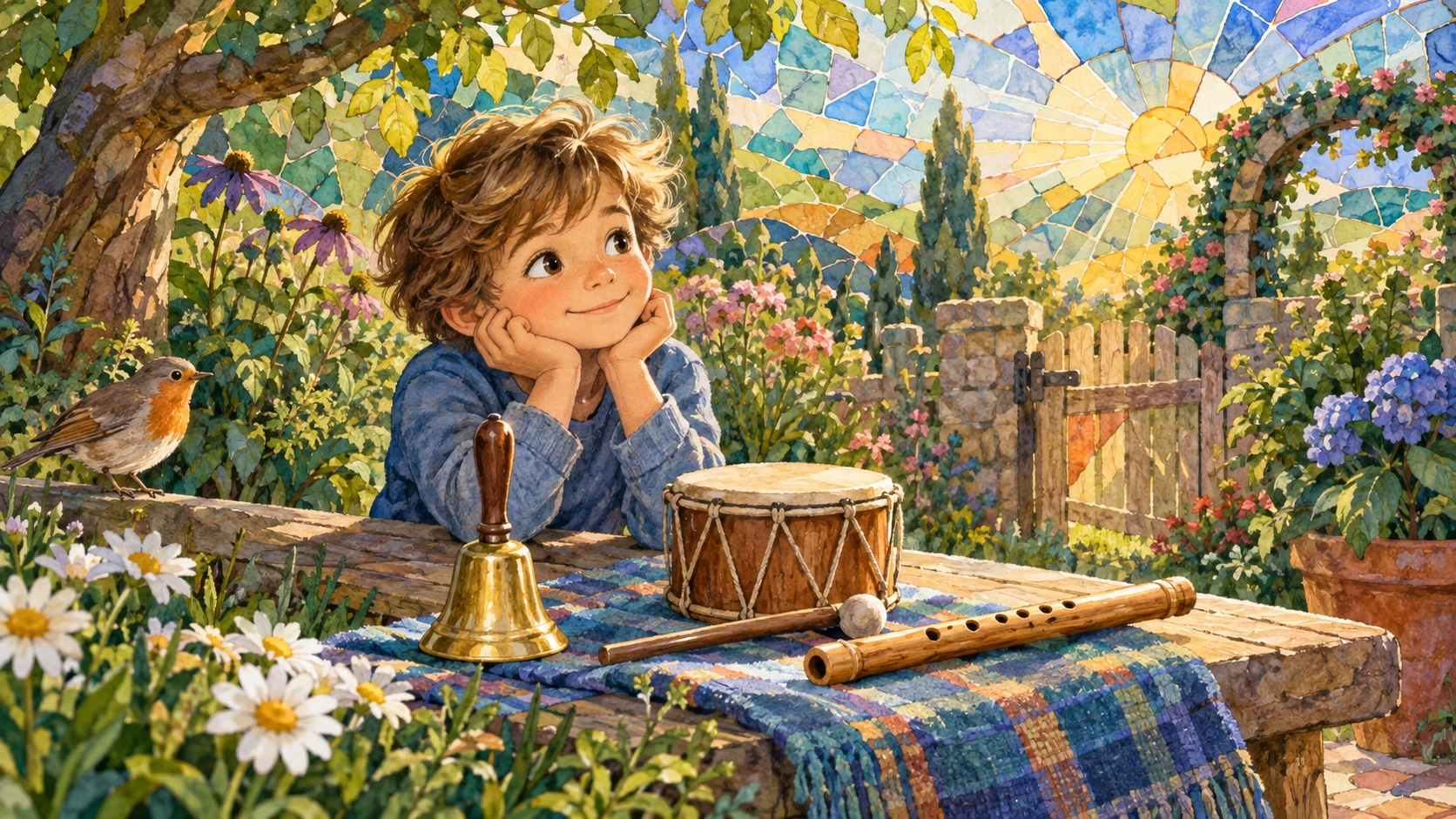
Play a familiar sound, such as a bird chirp, bell, drum, or car horn. Ask children to find an object whose color feels like that sound.
Keep it open-ended: different children may choose different colors.
Color-code the instruments
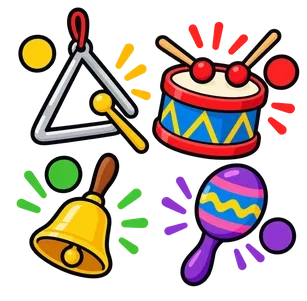
Choose a color for each toy instrument based on its sound: yellow for a sparkling triangle, brown for a deep drum, blue for a soft bell, or any color the child invents.
The child’s own sound-color map matters more than matching an adult answer.
- Different connections: sound-color links can be neurological, metaphorical, emotional, or artistic.
- No fixed answer: avoid teaching that one instrument must always be one color.
- Invite imagination: let each child notice their own sound, color, line, or shape.
- Useful prompt: “What color does this sound feel like to you?”
More for parents & educators
There is no correct color map. Listen without correcting, and treat every response as a personal observation rather than a test.
NOTICE
Nature Color Codes
Nature has its own color system. Colors can invite, protect, warn, mimic, glow through structure, paint the sky, or help a living thing disappear.

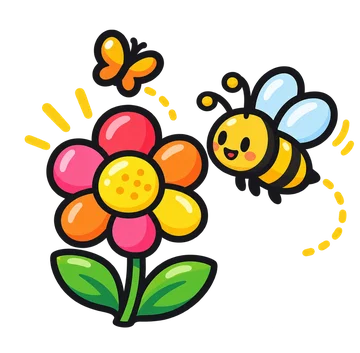
Flowers Invite
Bright petals can guide bees, butterflies, and birds toward nectar and pollen.
Color message: “Come closer.”
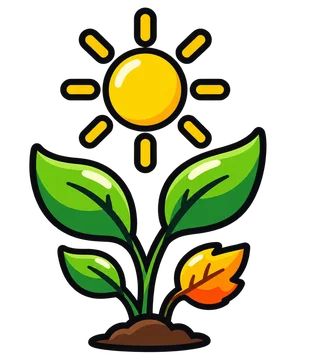
Leaves Gather Light
Green leaves hold chlorophyll, which helps plants use sunlight. Autumn colors appear when green fades.
Color message: “I am growing.”
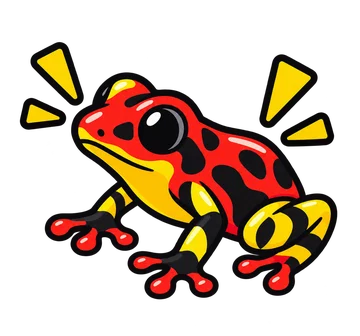
Warning Colors
Some animals use strong red, yellow, orange, or black patterns to say: “Do not eat me.”
Color message: “Stay away.”
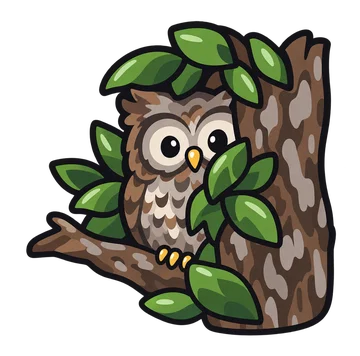
Hiding Colors
Brown, gray, green, and white can help animals blend into bark, leaves, stones, snow, or shadow.
Color message: “Look carefully.”
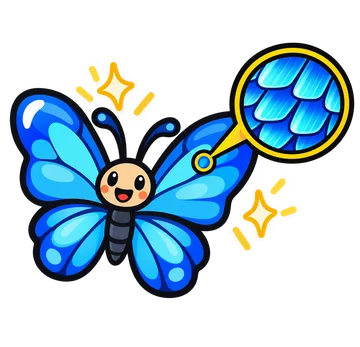
Structure Makes Blue
Some blue butterfly wings and bird feathers are not painted with blue pigment. Tiny surface structures bend and scatter light so blue reaches our eyes.
Color message: “Light can build color.”
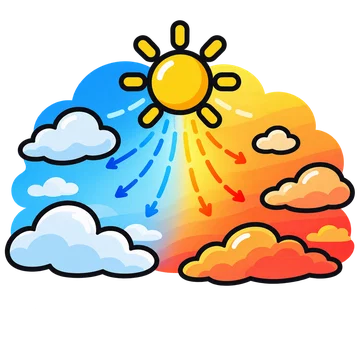
Sky Colors Scatter Light
Air molecules scatter short blue wavelengths across the daytime sky. When sunlight travels farther at sunset, reds, oranges, and yellows can reach us more strongly.
Color message: “Light is traveling through air.”

Copycat Colors
Some harmless animals copy the warning colors of dangerous animals. Predators may avoid them because the pattern looks risky.
Color message: “I look dangerous.”
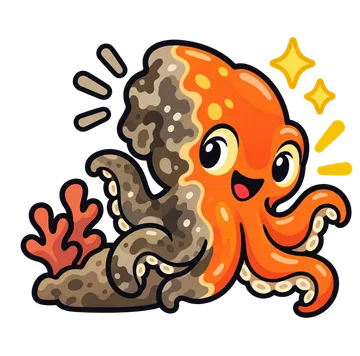
Color Shifters
Octopuses and cuttlefish can change color and texture quickly, helping them hide, signal, or confuse predators.
Color message: “Now you see me, now you don’t.”
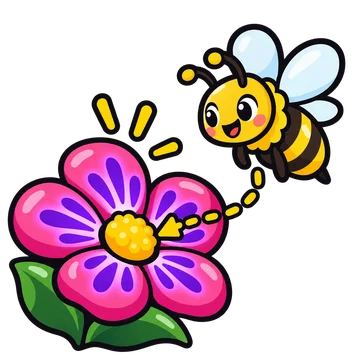
Hidden UV Guides
Many insects and birds can see ultraviolet light. A flower may have patterns that people cannot see, but pollinators can follow like landing marks.
Color message: “This way to nectar.”
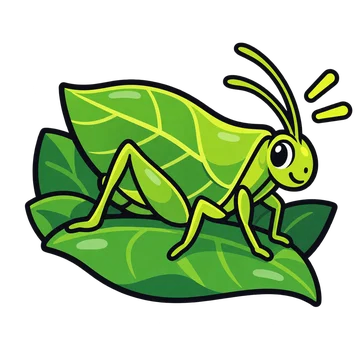
Green Disguises
Katydids, frogs, and many insects use green to disappear among leaves. In some animals, green comes from layers: yellow pigment plus blue-reflecting structure.
Color message: “I am a leaf.”
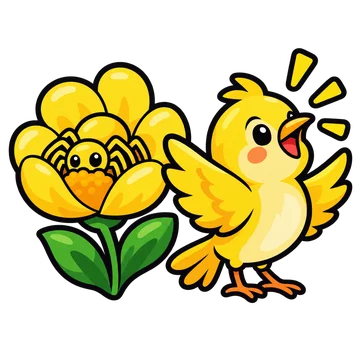
Yellow Hides and Shouts
A yellow spider can hide on a yellow flower, while a bright yellow bird may use color to be seen by a mate. Color meaning depends on the scene.
Color message: “Hide here, or notice me.”

Red Signals
Red can be a warning, a mate signal, or a sign of health. Many red and orange animal colors come from pigments connected to diet or body chemistry.
Color message: “Pay attention.”
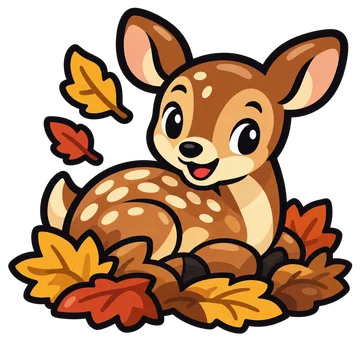
Earth-Tone Camouflage
Brown and tan coats, feathers, and wings help animals blend into bark, dry grass, soil, and fallen leaves. Fawn spots can mimic broken sunlight.
Color message: “The ground is my blanket.”

No True Green Fur
Many mammals are brown, black, gray, tan, red, or white, but true green fur is almost absent. A sloth may look green because tiny plants grow on its fur.
Color message: “Sometimes the color comes from a passenger.”
Color Detective
OPEN
Color Picture Guides
Choose a color question
Each question opens a simple Fables Library poster with a clear visual guide. You can return to the question list or continue to the next poster.

FIND
Animals by Color
Choose an animal color poster
Each poster opens a full visual guide. You can return to the poster list or continue to the next one.
