Choose your level
 Practice level | Level 1



Learn
Learn the Forms
Look at one number as a digit, word, quantity, and another familiar number form.
Patterns to see, hear, build, and play.
One number can wear many little coats.
Let Oakley show you the way.
Core Number Play — for example, 6:
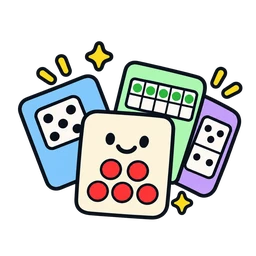
6, six, ⚅, six dots, six leaves, and 5 + 1 can all represent the same amount.
These are optional enrichment forms. They are not mixed into the core Visual Choice or Quiz activities.
Let’s keep playing with the number idea from your story.
Number practice
Oakley will open the matching garden activity.
Story practice complete
You explored the number idea from your story in another way.
Leave this blank and Oakley will call you friend.
Colours apply to notes and fingers; stickers label keys and staff notes. Fingers use five colours, notes use seven. Colours are optional learning aids.
Practice level | Level 1First Number FormsAges 4–5 See digits, words, dots, dice, objects, and fingers as ways to show the same amount.

Choose Math or Music, set a level for that subject, then choose an activity. Math and Music remember their own levels when you switch between them.
Choose an activity to begin. Back keeps the Music level.
Preview first: Moving the level control previews another Music level. It does not change the child’s active Music practice level until an activity is selected.
Use on activity choice: The previewed Music level becomes active when an activity is selected.
Back keeps the level: Returning to the Garden restores the committed Music level. Switching back to Math restores the child’s Math level separately.
Access: Children may respond by tapping, pointing, keyboard input, gesture, AAC-supported choice, listening, or playing. Spoken answers are never required. Important sound relationships are paired with visible cues where the concept depends on sound.
Short practice: For many young beginners, about 5–15 minutes is enough. End sooner when attention, comfort, or enjoyment starts to drop; consistency matters more than pushing through fatigue.
Let the child try: Demonstrate briefly, then give the child an independent turn before stepping in. Exploration and small mistakes are part of learning.
Praise the process: Notice careful listening, persistence, discoveries, and thoughtful retries, not only correct answers or finished songs.
Revisit earlier ideas: Return to familiar listening, keyboard, rhythm, and staff activities from time to time. The later levels deliberately reuse earlier concepts so learning can deepen instead of being taught once and forgotten.
Technique: Keep posture and hand-shape reminders gentle. Music Garden builds listening, rhythm, keyboard geography, and notation readiness; detailed fingering, tension, and technique correction belong with a qualified music teacher when needed.
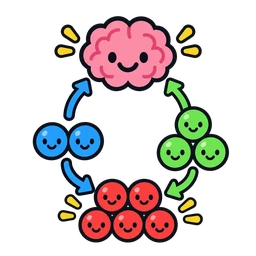
Math ↔ Music bridges: Small connection notes link part-whole thinking, patterns, and sequence across subjects. They highlight a shared thinking idea without treating Math and Music as the same curriculum.
Math Stories
Read Story Weaver books curated for this level so number ideas become visible inside a story.
Look carefully before you guess. The goal is to discover what changes each time.
One number can have many true relationships. Find a connection, then reveal more.
Take your time. Each question asks you to use a number relationship, not just recognize a card.
Check two rules for one animal or number. Choose first, then the Venn diagram will show why it belongs in one group, both groups, or neither.
Use grouped rows of 5 and recipe-style number pills to find the missing part. The goal is to build the total amount.
A large number is easier to understand when you can see what each place contributes.
Build and connect larger numbers. The same number can be described in several true ways.
Use place value, patterns, grouping, comparison, and number representations. There is no timer and every question can be retried.
Both paths visit the same ten ideas. Practice uses fewer choices and clearer visual support; Challenge starts with the full reasoning task.
Every new round reshuffles the ten concepts, uses new problem variants, and changes answer positions.

Challenge practice
See a number in different forms, then practice recognizing it.

Learn
Look at one number as a digit, word, quantity, and another familiar number form.
Practice
Practice with fewer choices, or take the full Number Forms challenge.
Level 2 keeps recognition concrete and supported.
Look closely. The same number can wear several different outfits.
Tap the pair that makes the whole number.
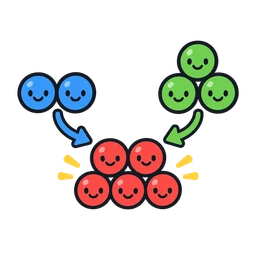
Can smaller parts make a whole number?

Learn
See how one whole number can be made from two smaller parts.
Practice
Practice remembering which two parts make the whole number.
Level 3 keeps the examples concrete and supported.
Which two smaller parts make 3?
Look at the two groups, then choose the matching pair.

Level 4 · Fractions with pizza
Use one familiar whole to see how fractions change.
Number Poster Guides
Each title opens a simple Fables Library poster with a clear visual guide. You can return to the poster list or continue to the next one.

LEVEL 3 · RHYTHM MATH
A beat keeps going: tap, tap, tap, tap. Explore these ideas with a grown-up.
Hear a steady beat. Tap along with your hand.
Try: Can you keep tapping when a grown-up pauses the sound?
App details stay in the grown-up note.Move colorful blocks to make animals play music.
Try: Change one block. What sounds different?
App details stay in the grown-up note.Turn drum squares on or off to make a rhythm.
Try: Make a short pattern. Play it twice!
Guide details stay in the grown-up note.Clap four steady beats. Then leave one beat quiet.
Try: Can you feel the beat during the quiet part?
Try it together, right here.Start with a comfortable volume and a simple, predictable pattern. Skip flashing effects if they are uncomfortable. Invite the child to choose whether to listen, watch, tap or pause.
App notes: Some Pro Metronome visual and vibration features require a paid upgrade. Loopimal explores sound sequences rather than building exact four-beat measures. GarageBand's Beat Sequencer may need adult setup. These open app information or a guide, not a built-in Garden activity; pricing and availability may change.
Pro Metronome app information. Loopimal app information. GarageBand Beat Sequencer guide.
Older reference: Toc and Roll review ↗. Current Canadian availability has not been confirmed; this is background reading, not a download recommendation.
These are optional learning tools, not autism therapies. Different children may prefer different kinds of sound and interaction.